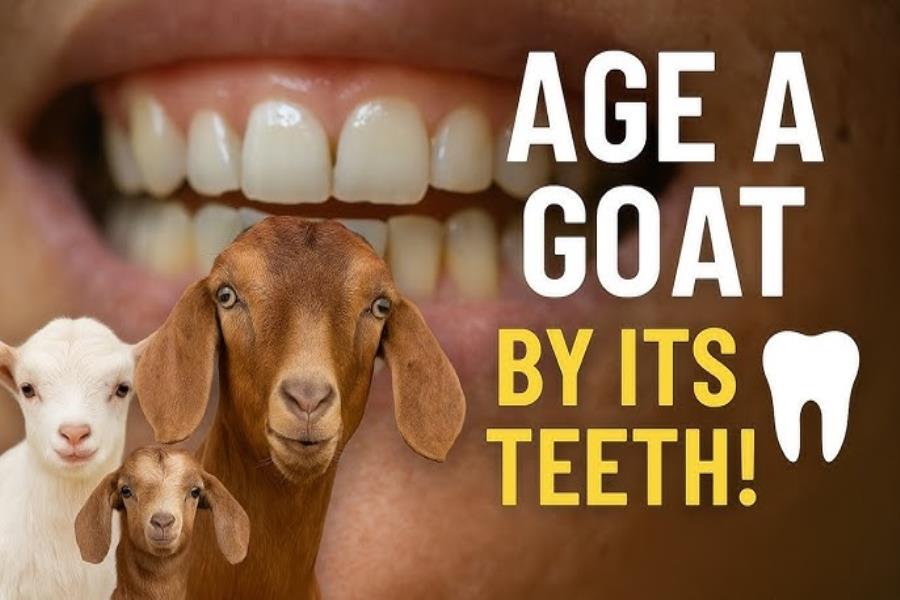
If you’ve ever bought or sold a goat without paperwork, you already know the problem. There’s no birth certificate. No tag. No way to verify what the seller tells you. That’s exactly why goat teeth age matters. The teeth don’t lie. A goat’s mouth follows a predictable eruption pattern from birth through adulthood — and once you know what to look for, you can estimate a goat’s age within a few months just by looking at its lower jaw. This guide breaks all of it down clearly, from the first baby teeth to the worn-down molars of an older animal.
What Is Goat Teeth Age and Why Does It Matter?
Goat teeth age refers to the practice of estimating a goat’s age by examining the development, eruption, and wear of its teeth — specifically the incisors on the lower jaw.
It matters for a few straightforward reasons. When you’re buying breeding stock, you want to know if a doe is at her peak productive years or past them. When you’re pricing an animal for sale, teeth tell the buyer something objective. And when records are missing — which happens more often than not in small-scale farming — the mouth becomes the only reliable reference point.
Vets use it. Farmers use it. Livestock judges use it. It’s one of the oldest and most practical skills in animal husbandry.
How Goat Teeth Actually Work
Goats have two sets of teeth — temporary (baby) teeth and permanent (adult) teeth. The permanent teeth come in gradually, replacing the baby incisors in a fixed sequence.
Here’s what makes this useful: the timing of each eruption is predictable. The first pair of permanent incisors appears around 12 months. By the time all four pairs are in, the goat is roughly 4 years old. After that, you shift from counting teeth to reading wear patterns.
Goats only have incisors on the bottom jaw. The upper jaw has a hard dental pad instead of teeth. There are 8 incisors total in the permanent set — 4 pairs — and each pair erupts at a different age.
Read More: Brittany Lake Age in 2026
Goat Teeth Age Chart — Full Eruption Timeline
This is the core reference table. Use it every time you’re examining a goat’s mouth.
| Age | Teeth Stage | What You See |
| Birth – 1 week | 2 baby incisors (central pair) | Tiny, narrow, close together |
| 1–2 weeks | 4 baby incisors | Second pair visible |
| 3–4 weeks | 6 baby incisors | Third pair in |
| By 4 weeks | 8 baby incisors (full set) | All temporary incisors present |
| 12–18 months | 2 permanent incisors | Central pair replaces baby teeth — wider and longer |
| 2 years | 4 permanent incisors | Second pair of permanent teeth in |
| 3 years | 6 permanent incisors | Third permanent pair erupted |
| 4 years | 8 permanent incisors | Full adult mouth — all 4 pairs permanent |
| 5–6 years | Wear begins | Teeth start to show flattening and spacing |
| 7+ years | Heavy wear / broken teeth | Gaps, uneven surface, possible tooth loss |
How to Read Goat Teeth Age Step by Step
You don’t need any tools. Just a calm goat and good light.
Step 1 — Restrain the goat gently. Stand beside it or have someone hold it steady. You don’t need to pin it down. Just enough control to open the mouth.
Step 2 — Open the lower jaw. Slide your thumb into the gap between the incisors and the premolars (the gap is called the diastema). Press gently and the mouth opens naturally.
Step 3 — Look at the lower front teeth. Count how many are permanent (wide, longer, darker at the base) versus temporary (small, narrow, whiter).
Step 4 — Check the wear. On older animals, look for flat tops, separation between teeth, or missing teeth. These signs push the estimate past 4 years.
Step 5 — Match what you see to the chart. No single feature gives you a precise number — you’re reading the whole picture.
Goat Teeth Age — Reading Wear on Older Animals
Once all 8 permanent incisors are in (around age 4), eruption stops being useful. From that point forward, wear patterns take over.
| Wear Stage | Estimated Age | Signs to Look For |
| Slight leveling | 4–5 years | Tops of incisors start flattening |
| Moderate wear | 5–6 years | Visible gap between teeth, enamel thinning |
| Heavy wear | 7–8 years | Teeth noticeably shortened, spacing obvious |
| Broken / missing | 8+ years | Broken stumps, some teeth gone entirely |
It’s worth knowing that wear rate isn’t perfectly uniform. Goats on rough pasture or sandy soil wear their teeth faster. Goats fed mostly hay or pellets may show less wear at the same age. Diet affects the timeline.
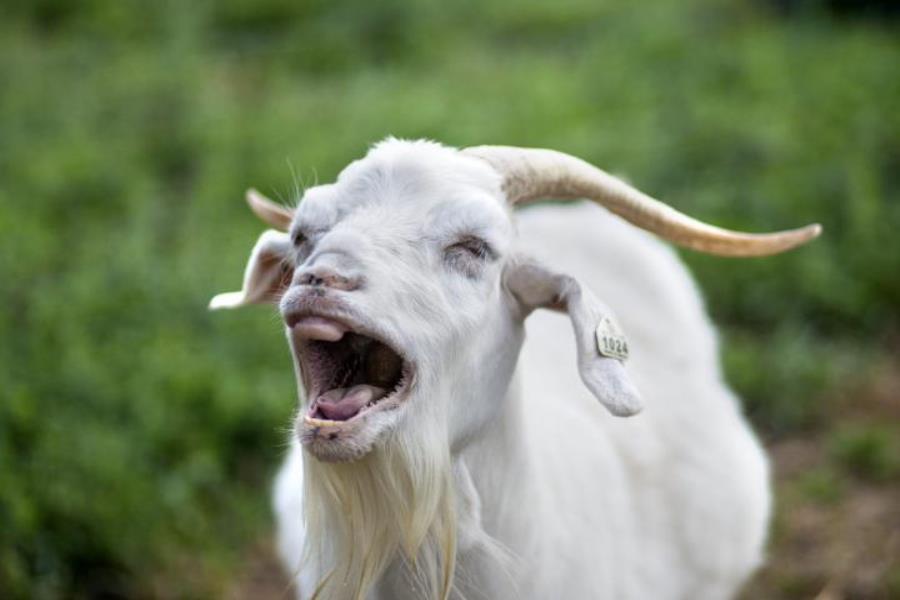
Goat Teeth Age Across Contexts — What It Means in Different Settings
Different people use goat teeth age information for different reasons. Here’s how it applies across settings:
| Context | How Goat Teeth Age Is Used | What to Focus On |
| Livestock markets | Estimate value and breeding life | Permanent pairs present |
| Breeding programs | Confirm doe is in productive years | 1–4 years ideal |
| Veterinary checks | Baseline health and age estimate | Full mouth exam |
| Meat production | Determine tenderness and grade | Younger = more tender |
| Conservation grazing | Assess herd age distribution | Mix of tooth stages preferred |
| First-time buyers | Verify seller’s stated age | Compare to eruption chart |
Common Mistakes When Reading Goat Teeth Age
A few things trip people up when they first start doing this.
Confusing temporary and permanent teeth. Baby teeth are narrow and bright white. Permanent teeth are wider, slightly off-white or yellowish, and have a more pronounced neck at the gum line. Once you’ve seen both side by side, the difference is obvious.
Assuming wear always means old age. A young goat on a gritty pasture can show wear earlier than expected. Always cross-reference with the eruption pattern before jumping to conclusions.
Only checking one side. Sometimes the eruption is slightly uneven. Check the full row.
Ignoring the gum line. Swollen or receding gums can affect how the teeth look and may indicate health issues beyond age.
Read More: Mitch Albom Age
Quick Reference — Goat Age by Teeth Summary
If you need a fast answer without scanning the full chart, here it is:
| What You See | Estimated Age |
| All baby teeth, no permanent | Under 12 months |
| 1 pair permanent (2 teeth) | Around 1–1.5 years |
| 2 pairs permanent (4 teeth) | Around 2 years |
| 3 pairs permanent (6 teeth) | Around 3 years |
| 4 pairs permanent (8 teeth) | Around 4 years |
| Wear but all teeth present | 4–6 years |
| Heavy wear or missing teeth | 7 years and older |
FAQs:
Q: How do you tell a goat’s age by its teeth?
A: Count the permanent incisors on the lower jaw. Each pair of permanent teeth that has replaced the baby teeth represents roughly one year of age. One pair = 1 year, two pairs = 2 years, up to four pairs at age 4. After that, read wear patterns.
Q: At what age does a goat get its first permanent teeth?
A: Around 12 to 18 months. The central pair of incisors is the first to be replaced by permanent teeth.
Q: How many teeth does an adult goat have?
A: Adult goats have 32 teeth total — 8 incisors on the lower jaw, 6 premolars and 6 molars on each side, and no upper incisors (replaced by a hard dental pad).
Q: Can you tell the exact age of a goat from its teeth?
A: Not exactly. Goat teeth age estimation gives a range, not a precise date. Diet, breed, and environment affect wear rates, so teeth give an estimate — usually accurate within 6 to 12 months.
Q: What do worn goat teeth mean?
A: Significant wear on the incisors usually means the goat is 5 years or older. Heavy wear, spacing between teeth, or broken teeth suggest 7 years and beyond.
Q: Do all goat breeds have the same tooth eruption pattern?
A: The general pattern is consistent across breeds, but timing can vary slightly. Larger breeds may develop slightly faster. Diet and environment also play a role.
Final Word
Goat teeth age is one of those skills that sounds technical until you actually try it — and then it clicks fast. The eruption pattern is consistent enough that even a first-time farmer can get a reliable estimate with a bit of practice. Start with the central incisors. Count the permanent pairs. Read the wear on older animals. Use the chart above every time until it’s second nature.
It’s not a perfect science. But it’s the best tool available when records don’t exist — and in livestock, that’s most of the time.

James is the creative mind behind worthelevate.com, with 4 years of experience writing hilarious puns, including food puns and animal puns. His witty articles add humor to everyday topics, making him a go-to for those seeking a fun twist on their favorite meals and animals.






1 thought on “Goat Teeth Age — The Exact Method Farmers Use to Tell How Old a Goat Is”