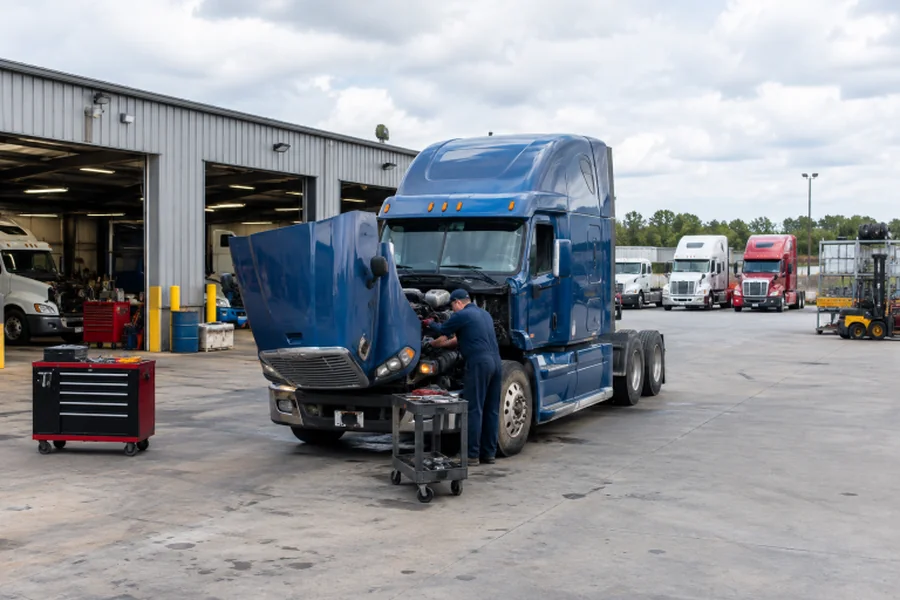
Heavy-duty diesel failures rarely appear without warning. A change in starting behavior, pulling power, smoke, vibration, fluid use, or engine sound can be an early clue that deserves attention. Whether a truck runs a Cummins ISX engine or another commercial diesel engine, consistent inspections help operators detect changes before they lead to costly downtime.
The goal is not to diagnose every concern in the driveway. It is important to notice what is different, document it accurately, and address it before the vehicle is forced out of service. A planned repair gives owners more options than an unexpected roadside breakdown.
Why Early Warning Signs Matter
A serious engine issue may begin with a minor symptom. Longer cranking, reduced acceleration, repeated low-fluid warnings, a rough idle, or a new whistle from the intake system should be recorded rather than dismissed. For example, a falling coolant level may be due to an external hose or clamp, but it can also require a more thorough inspection of the cooling system.
Responding early does not guarantee a small repair. It does, however, improve the chance of scheduling diagnostic work before a component failure creates additional damage or interrupts a load, jobsite, or route.
Daily Engine Checks That Take Minutes
A practical pre-trip or pre-shift walk-around creates a baseline for normal conditions. The check does not need to be complicated:
- Check engine oil and coolant at the proper inspection points.
- Look beneath the vehicle for leaks of fresh oil, fuel, coolant, or diesel exhaust fluid.
- Inspect visible belts, hoses, clamps, wiring, and connectors.
- Check the air-filter restriction indicator if the vehicle has one.
- Look for loose intake piping, charge-air hoses, or exhaust connections.
- Note warning lamps and messages before beginning work.
One small wet spot may not reveal much. The same wet spot appearing repeatedly, or a fluid level that needs regular topping off, is a pattern worth investigating.
Fluid Monitoring And Filter Care
Oil protects internal moving parts and turbocharger components. Coolant transfers heat and helps protect the cooling system when the correct formulation and concentration are maintained. Fuel filters and water separators help protect modern fuel-system components from contamination.
Track more than the date of the last service. Record oil added between changes, coolant additions, drained water from the separator, unusual filter condition, and any oil that smells strongly of fuel or appears contaminated. Follow the engine manufacturer’s specified fluids, capacities, and replacement intervals instead of relying on a generic schedule.
Fuel, Air, And Turbocharger Checks
Diesel engines need clean fuel and sufficient airflow to run properly. Restricted intake airflow, charge-air leaks, fuel supply problems, or turbocharger faults can contribute to low power and poor combustion. A loose charge-air hose, for example, can feel like a major engine problem because the vehicle may struggle under load, even though the failed part may be a clamp or hose.
Areas That Deserve Attention
- Fuel filters, water separators, and fuel-line leaks.
- Air-filter condition and air-intake restrictions.
- Charge-air cooler boots, pipes, and clamps.
- Turbocharger noise, oil leakage, and condition were checked against manufacturer guidance.
- Injector performance when scan data or symptoms indicate a fueling concern.
- Exhaust leaks near sensors and aftertreatment components.
Aftertreatment Care In Modern Diesel Engines
Modern diesel systems commonly use exhaust gas recirculation, a diesel oxidation catalyst, a diesel particulate filter, and selective catalytic reduction. A diesel particulate filter captures particulate matter from exhaust, while regeneration is used to reduce collected soot under the conditions intended by the system design.
Aftertreatment equipment cannot correct the root cause of excessive soot or oil consumption. Restricted airflow, injector faults, poor combustion, and some turbocharger-related problems can place added stress on the exhaust system. For SCR-equipped equipment, use the correct diesel exhaust fluid and follow the operating guidance for diesel exhaust fluid systems, as well as the engine maker’s service instructions.
Common Symptoms And What They May Mean
Symptoms are starting points for diagnosis, not proof that one specific part has failed.
- Hard starting:Check batteries, fuel supply, air entering the fuel system, sensors, and engine condition.
- Low power:Check the air filter, turbocharger system, charge-air plumbing, fuel delivery, and exhaust restriction.
- White smoke:Consider cold combustion, injector concerns, coolant entry, or compression-related problems.
- Blue smoke:Check for oil entering the combustion process, including possible engine or turbocharger-related causes.
- Black smoke:Inspect air supply, fueling, intake restrictions, and combustion quality.
- Rising oil or coolant levels:Check for external leaks first, then use appropriate tests to identify internal issues.
A Better Diagnostic Process
A disciplined process reduces unnecessary parts replacement. Start by recording when the symptom occurs, then inspect fluid levels and visible components, scan for active and stored codes, and test the systems connected to the complaint. Pressure, temperature, fuel-system, or compression testing may be needed before approving repairs.
A fault code identifies a condition detected by the control system. It does not always identify the failed component. Wiring damage, poor connections, leaks, restrictions, and mechanical faults can all create codes that appear to point elsewhere.
Repair Planning And Downtime Control
Major repair options can range from replacing a hose or sensor to component work, an in-frame repair, or a complete engine replacement. The right path depends on the confirmed failure, engine condition, labor cost, parts availability, vehicle age, and expected future use.
Before authorizing substantial work, ask what caused the failure, what testing supports the diagnosis, which parts can safely be reused, what labor and parts are included, what warranty applies, and how long the vehicle will be unavailable.
Maintenance Records And Monthly Reviews
Maintenance records are diagnostic tools, not just paperwork. A simple log should include the date, mileage or engine hours, oil and filter service, coolant additions, fault codes, repairs, replaced parts, and follow-up notes. Over time, these details can reveal increasing fluid intake or recurrent complaints.
Each month, review fluid levels, inspect intake and charge-air plumbing, check the condition of the fuel filter and water separator, review fault codes, inspect belts and hoses, and confirm that scheduled service is up to date. Steady maintenance habits give operators more control over repair costs, reliability, and downtime.
Conclusion
Recognizing early changes in diesel engine performance can help operators address problems before they become costly failures. Regular inspections, accurate maintenance records, proper diagnostic testing, and manufacturer-recommended service intervals provide a practical foundation for improving reliability and managing downtime.

James is the creative mind behind worthelevate.com, with 4 years of experience writing hilarious puns, including food puns and animal puns. His witty articles add humor to everyday topics, making him a go-to for those seeking a fun twist on their favorite meals and animals.








1 thought on “Heavy-Duty Diesel Engine Care: A Practical Guide To Catching Problems Early”