What Is Synthetic Urine? The Science Behind a Surprisingly Useful Lab Product
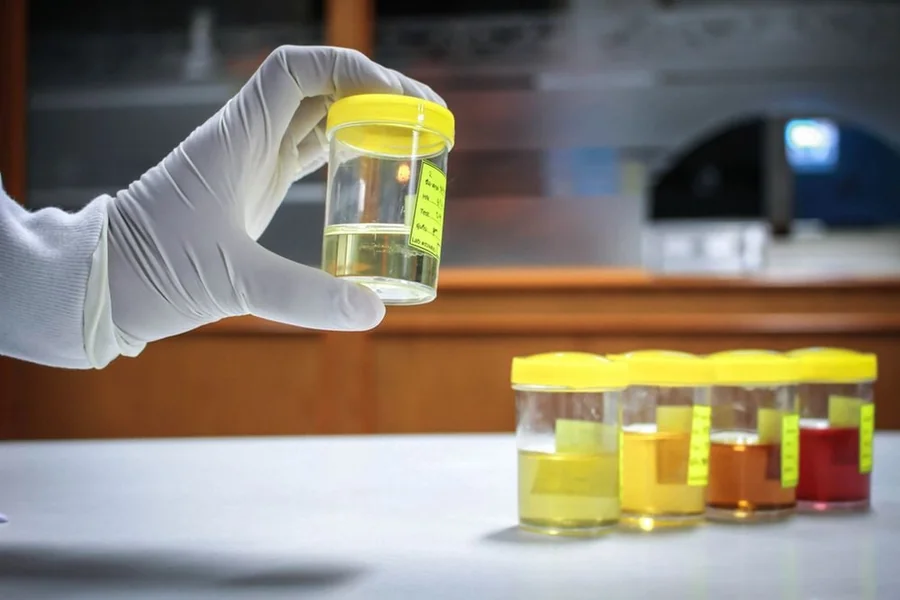
Synthetic urine sounds like a novelty item, and online it is often marketed as one. But artificial urine has a long and serious history in science. Researchers use it to study infections, test medical devices and train students, and manufacturers rely on it to test everything from diapers to cleaning products.
This article explains what synthetic urine is made of, why scientists need it and where it turns up in everyday life.
Why Not Just Use Real Urine?
Real urine is surprisingly hard to work with in a lab. Its composition changes from person to person, and even in the same person from hour to hour, depending on diet, hydration, medications and health. It can carry infections, it degrades quickly at room temperature and collecting it in large quantities raises practical and ethical issues.
For experiments that need to be repeated and compared, that variability is a problem. A standardized, synthetic version solves it by giving researchers a consistent liquid with the same basic chemistry every time. Check out LabCorp synthetic urine testing.
What Is Synthetic Urine Made Of?
Human urine is mostly water, with dissolved waste products and salts. Synthetic versions recreate that mix using laboratory-grade ingredients. Common components include:
- Urea, the main nitrogen-containing waste product in urine
- Creatinine, a breakdown product of muscle metabolism
- Uric acid, another nitrogen waste compound
- Salts such as sodium chloride, potassium chloride and phosphates
- Sulfates and magnesium or calcium salts to reflect mineral content
- pH buffers to keep acidity within a realistic range
Depending on the purpose, recipes may also include color, small amounts of proteins, sugars or other compounds to mimic particular health conditions.
From Simple Salt Solutions to Research-Grade Media
Early artificial urines were little more than salt and urea dissolved in water. They were useful for testing materials but did not behave like real urine biologically. Over the decades, scientists refined recipes to support the growth of bacteria found in the urinary tract, which made them valuable for studying infections and catheter contamination.
Research is still advancing. In 2026, a team published a fully defined artificial urinary medium called SimUrine, designed to replicate the chemistry of urine in the human bladder more closely while supporting the growth of a wide range of urinary microbes. The researchers note that using real urine samples introduces donor-to-donor variability that makes experiments hard to reproduce, which is exactly the problem synthetic formulations aim to solve.
Where Synthetic Urine Is Used
Outside research labs, synthetic urine supports a range of practical industries:
Medical Device Testing
Catheters, urine bags and sensors are tested with artificial urine to check durability, corrosion resistance and how easily bacteria form biofilms on their surfaces.
Absorbent Product Development
Manufacturers of diapers, incontinence pads and pet training pads use synthetic urine to measure absorbency, leakage and odor control under repeatable conditions.
Cleaning and Odor Products
Companies developing enzyme cleaners and odor neutralizers need a consistent test liquid to prove their products work on urine stains.
Education
Medical, nursing and laboratory science students practice urinalysis techniques on synthetic samples, avoiding the hygiene risks of handling real specimens.
Consumer Synthetic Urine Brands
Alongside laboratory suppliers, a consumer market for premixed synthetic urine has also grown. Brands such as Quick Fix Synthetic sell ready-made formulations to the public. It is worth being clear about the law here: synthetic urine is legal to buy in most places for uses such as novelty, product testing or education, but using it to defraud a lawful drug test is a crime in many US states. Accredited testing laboratories, like also routinely check whether samples are consistent with human urine, so substitution carries real legal and employment risks.
A Lab Tool With a Long History
Synthetic urine is far more than a gag gift. Its consistent, controllable chemistry makes it essential for studying urinary infections, testing medical devices and absorbent products, developing cleaning solutions and teaching the next generation of clinicians. As research-grade formulations such as SimUrine, a fully defined artificial urinary medium, become more sophisticated, artificial urine continues to help scientists do work that real samples simply cannot support.

James is the creative mind behind worthelevate.com, with 4 years of experience writing hilarious puns, including food puns and animal puns. His witty articles add humor to everyday topics, making him a go-to for those seeking a fun twist on their favorite meals and animals.



Comments